EVENT: Security Jam – Brainstorming Global Security (online event, 14-16 October 2014)

Organised by The Security and Defence Agenda, this online event brings together thousands of security stakeholders from government, the military, academia, think-tanks, media and NGOs to discuss the conflicts in Ukraine and Syria, NATO and cybersecurity, among other.

“Over 54 hours and across 6 discussions forums, participants will login to a state-of-the-art online collaboration platform to discuss topics as diverse as strategic partnerships, crisis management, future capabilities and cyber-security. Experts from leading think-tanks around the world will moderate the discussions to produce top recommendations.

Now it’s your turn. Seize this opportunity to share your ideas with world leaders! Whether you are a soldier in Afghanistan, a researcher in Stockholm or a diplomat in Kenya, the quality of your ideas is all that matters. The Security Jam lets you take part in frank discussions and the free exchange of ideas with colleagues worldwide, and you select the most innovative ideas.

Make a real impact. The Jam’s top 10 recommendations will provide a roadmap for the new EU and NATO leaderships and will be presented to them at a high-level event in Brussels. The report will also be distributed to thousands of top policymakers and decision-makers across the public-private divide globally.”

For more information and how to register, go to the website.

FELLOWSHIP: 2015-2016 Inter-American Foundation Fellowship Competition Announcement

The deadline for applications for the 2015-2016 Fellowship Cycle of the IAF Grassroots Development Ph.D. Fellowship Program is JANUARY 20, 2015.

Fellowships are available to currently registered students who have advanced to candidacy (by the time research begins) for the Ph.D. in the social sciences, physical sciences, technical fields and the professions as related to grassroots development issues. Applications for clinical research in the health field will NOT be considered.

Awards are based on both development and scholarly criteria. Proposals should offer a practical orientation to field-based information. In exceptional cases the IAF will support research reflecting a primary interest in macro questions of politics and economics but only as they relate to the environment of the poor. The Fellowship Program complements IAF’s support for grassroots development in Latin America and the Caribbean, and preference for those applicants whose careers or research projects are related to topics of greatest interest to the IAF. These include, but are not limited to, the following:

  • Organizations promoting grassroots development among poor and disadvantaged peoples;
  • The financial sustainability and independence of development organizations;
  • Trends affecting historically excluded groups, such as African descendants, indigenous peoples, women, LGBT, people with disabilities and young people;
  • Transnational development;
  • The role of corporate social responsibility in grassroots development;
  • The impact of globalization on grassroots development;
  • The impact on the quality of life of the poor of grassroots development activities in such areas as sustainable agriculture and natural resource management, housing, health care, education, urban development, technology transfer, jobs creation, and marketing and small-enterprise development.

Funding is for between four and 12 months. Research during the 2015-2016 cycle must be initiated between June 1, 2015 and March 31, 2016.

IAF’s Fellowships provide support for Ph.D. candidates to conduct dissertation research in Latin America and the Caribbean on topics related to grassroots development. The Inter-American Foundation expects to award up to 15 Doctoral Field Research Fellowships in 2015.

Complete proposals include:

  • A complete research prospectus – an application statement, a field research prospectus, a Curriculum Vitae (custom), and a Personal Statement;
  • A letter of University Certification;
  • A letter of affiliation from at least one host organization;
  • Statement of IRB Status or proof of submission or approval;
  • Graduate transcripts;
  • Three academic letters of reference, one which must be from the chair of the applicant’s dissertation committee;
  • A Language Proficiency Report.

Selected candidates must present proof of candidacy and IRB exemption or approval prior to receiving funding or entering the field.  Complete application information and instructions are available at www.iie.org/iaf.

Defending your thesis in… the United Kingdom

Verena Brähler, one of our Researching Security Fellows, is sharing with us her experience of defending her PhD thesis in the United Kingdom.

September 2014

Thesis defence procedure in the United Kingdom

Contrary to most other countries in Europe, the PhD thesis defence in the United Kingdom is not a formality. The thesis defence in the UK is called viva voce (“with the living voice”). It is an oral examination with two examiners and may require a substantial amount of preparation. Usually you will have one internal examiner from your university and one external examiner. Unless you request otherwise, your supervisor(s) will not be present during the examination and neither will be any members of the public. That is quite nice actually because the examiners will focus on discussing the most important aspects of your thesis, rather than asking tough questions “to entertain the audience”. The examination can take between two and four hours and these are the most common outcomes:

  1. Pass: I personally do not know anyone who has passed the viva straight away but, theoretically speaking, it is possible.
  2. Pass with minor corrections: This is the most common outcome. You get 3 months to make minor amendments to your thesis, based on what was discussed during the viva.
  3. Major corrections: This seems to happen to very few people. It means that you get another 18 months to make substantial changes to your thesis.
  4. Fail: Theoretically speaking, there is a possibility that you can fail but I have never heard of anyone who did.

Preparation

Given these different outcomes, it is smart to prepare for the viva. In my case, I submitted my thesis in March 2014 and had six weeks to prepare for the viva in the beginning of May. At the time, I was already working in Vienna and doing an internship with UNODC. I used the two weekends prior to my viva to read the whole thesis again (you wouldn’t believe how many typos I still found) and think about how I would answer the following questions:

  • What is original about your thesis? What sets your work apart from others?
  • What are the strongest/weakest parts of your work?
  • What were the crucial research decisions that you made? How did you resolve any issues which arose in the course of your research?
  • How did you tackle the ethical implications of your work?
  • Who is your audience?
  • What is the agreed methodology in your discipline?
  • Do you anticipate publishing the material? And, if so, what aspects?
  • What researchers would be interested in your work?
  • What are the theoretical underpinnings to your work?
  • Who would be most likely to agree/disagree with your findings?
  • How long do you expect your work to remain innovative? Do your contributions have a limited timescale?
  • Do you think that your recommendations are feasible?

One the day

My examination was in London. On the day, I felt pretty calm and well prepared. I always thought that I am a bit better in speaking than in writing, so I felt confident but not exactly über-enthusiastic. When I walked into the room, my two examiners welcomed me and started the viva by asking two ice-breaker questions:

  • How did you come to research this topic?
  • Do you have any plans to publish some of the materials?

Then in the following 40 minutes, the examiners went straight into criticising my main argument (“oligopoly of security providers in Rio de Janeiro”) and it was quite challenging to defend my research choices. The rest of the viva continued in a similar format. One of the professors would give a “mini-lecture” on a certain aspect of my thesis and I then had the opportunity to defend myself and explain my arguments. The whole process was quite exhausting but I also enjoyed it because it showed that these two very distinguished and well-known professors had read and analysed my whole thesis (a good 290 pages) in a lot of depth.

After the examination, I had to leave the room quickly so that the professors could decide on the outcome of the viva. When I was asked back into the room, they told me that I had passed with minor corrections and explained the changes I needed to make over the next three months. I was very happy with this result and felt relieved. We called my supervisor and together we had a glass of champagne and then went for dinner.

After defending the thesis

On the next morning, I had to go immediately back to Vienna to continue with my work at UNODC. The next day at work I felt that I must be one of the smartest and dumbest interns my department ever had. Smart because I had just passed my PhD viva and dumb because here I was, 28 years old and doing an unpaid internship. Two weeks later, I received the official report by the examiners. It was quite a lot of pages so I panicked a bit and then not looked at it again for the next two months while finishing the internship.

Upon my return to London, I immediately started working on the corrections and it took me a good three weeks. I must say it was quite difficult because after a few months of working outside academia, it felt like a huge step backwards to work on the thesis again. I also felt under a lot of pressure to find a job and sometimes I felt that the thesis corrections were getting in the way of my job applications (or the other way around?). All in all, I must admit though that the thesis has been hugely improved by doing the minor corrections and I am grateful that I was forced to go through this rite of passage.

Useful information

For those preparing for the viva, I would recommend to watch these videos by Imperial College London which explain the examination process quite nicely. And if I can just give you one piece of advice: write your thesis as best as possible before you submit it! Little inconsistencies in your arguments, a weak theoretical framework or unfeasible policy recommendations may backfire at you during the viva. From my own experience, I can say that making changes to the thesis after the examination is a lot harder than before, simply because your mind will already be in another world.

To read more on this topics, read “Defending your PhD thesis in… Spain” by Jorrit Kamminga.

CALL FOR PAPERS: Power and Change in the Americas in the Modern Era (30 April – 1 May 2015, University College London)

The UCL Americas Research Network is pleased to invite scholars to participate in its first International Postgraduate Conference, to be hosted at University College London from April 30 – May 1, 2015.

This two-day conference seeks to cater to an international community of postgraduate and early-career researchers of the Americas from across the humanities and the social sciences. We welcome paper proposals that address the overarching theme of the conference.

Power and Change in the Americas in the Modern Era

Geographically, this includes the whole Western Hemisphere (Central, South, and North America, as well as the Caribbean). By adopting a broad, hemispheric perspective, we hope to encourage debates that extend beyond the boundaries of the nation-state, and to question the validity of cultural divides that often limit research agendas and enclose perceptions of complex problems and communalities.

The conference, organized by UCL Americas Research Network, especially invites doctoral students and early career researchers whose work ranges both geographically and temporally, and will encourage interdisciplinary conversations on national, regional and local topics and those whose focus is comparative, transnational and global. By facilitating a space to have these discussions, this conference aims to create an ongoing platform and network for collaborative exchange.

The structure of the conference consists of the following three thematic approaches or streams across which different panels will be formed to addressing related topics in an innovative and interdisciplinary manner over the course of the two days.

Stream 1: Representations, Ideology, and Ideas of Change
Stream 2: Institutions, the State, and Governments
Stream 3: Contesting Powers and Social Practices

If you are interested in participating, please indicate in your paper proposal the thematic approach in which you would like to participate. If you are unsure which one fits best, please do not hesitate to contact the organizing committee with any questions at:

uclamericasresearchnetwork@gmail.com

The organizing committee invites all interested doctoral students and early-career researchers to submit abstracts, which should not exceed 300 words, as well as a brief biography of no more than 50 words, which should include your name, email, and institutional affiliation. The deadline for abstracts and paper proposals is November 15th 2014.

Please submit your abstracts to: uclamericasresearchnetwork@gmail.com

NB: This conference will be free to attend, both for speakers and for the general public, though prior registration for attendance without presenting a paper is essential. Details on how to register will follow shortly. Keynote speakers will be confirmed soon.

Key dates:

Deadline for paper-proposal submission: November 15th 2014
Deadline for paper submission: March 20th 2015
Conference: April 30th to May 1st 2015

For more information, please click here.

From the Desk to the Pram: PhD and Parenthood

By Susan Hoppert-Flaemig, September 2014

One of the things I love about being a PhD researcher in Peace Studies in Bradford is learning about other researchers’ lives since they come from all over the world. When I was pregnant I talked to my colleague from Ethiopia about social and family policy. He was surprised to hear about the social benefits for families in Germany – “You get money for having a baby?!” It reminded me how blessed I am; I live in one of the countries with almost ideal conditions for raising children (even if many Germans don’t think so): it is a peaceful and safe environment with access to health care and education and with financial support from the state. Indeed, my baby is healthy and happy, and as a mum I am happy too.

As a PhD researcher, however, a baby is a challenge. While my colleagues finish their PhDs, publish articles, and apply for grants, my researcher career slowed down several months ago. I can’t really say what it is like writing a thesis and having a baby because I have not been able to work on the thesis since my son was born. But I do remember what it was like to write a thesis and I observed some similarities between doing a PhD and having a baby: PhDs/ babies demand a lot of my attention and time. I am constantly thinking about the PhD/ the baby and I tend to neglect and forget other things: Social life is scarce, the dirty laundry is piling up, and I just can’t remember the pin number of my credit card. It also takes hours before I get dressed in the morning – I might lose a good idea on how to continue with my chapter if I don’t sit down immediately after breakfast; and my son doesn’t care whether I’m in my pyjamas or not when I carry him around.

I also observed some difference between doing a PhD and having a baby: for someone who spent years sitting at the desk, it is physically exhausting having a child. Not only am I sleep deprived, I am also constantly carrying my son while shopping/ washing the dishes/ making dinner; instead of sitting at my desk I walk around; and the pram needs to be lifted up and down the stairs daily. Finally, although I like my research topic, life with a baby is more fulfilling; it feels more complete and goes deeper. Every now and then I have doubts about my PhD but raising a child is always meaningful.

Next week, my husband’s paternity leave begins (another benefit of living in Germany…) which means I will start working on the thesis again. I have mixed feelings about it: I look forward to returning to academic work (and to sitting down at my desk) but it also means less time with my son, and the pressure to complete the thesis will be more present. I will have to learn to live with that feeling that probably many PhD researchers who are also parents know: The constant feeling of being torn between being a good parent and pursuing an academic career.

To read more about PhD and parenthood, read Kari Mariska Pries‘ article on “Fieldwork in Violence and Security: The Impact of Researcher Pregnancy.

Defending your PhD thesis in… Spain

Jorrit Kamminga, one of our Researching Security Fellows, is sharing with us his experience of defending his PhD thesis in Spain. 

Thesis defence procedure in Spain
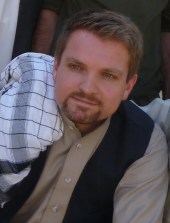
Photo Jorrit KammingaI defended my PhD thesis at the Department of Constitutional Law and Political Science of the University of Valencia, Spain in April 2014. Being a part-time student, I had combined work and study since I started the PhD programme in 2008. I followed the trajectory of getting the title doctor europeo (now doctor internacional under Spanish law). One of the requirements is having an international tribunal in addition to conducting part of the research at a different university outside of Spain and writing part of the thesis in a language other than Spanish. The international tribunal for my thesis defence was made up of a Spanish, Colombian and Dutch professor. The language was English.

Similar to my home country (the Netherlands), the thesis defence in Spain is a formality. In other words, when the tribunal is planned, you already know that you will pass and that your thesis is good enough to get the title – unless perhaps you have a complete blackout and fail to answer any question. However, different from the Netherlands, there were no additional ceremonial parts to the defence, such as special togas or silly hats.

Preparation

I prepared myself reading bits and pieces from the thesis, especially those related to methodology and the theoretical model of the thesis. It was not necessary to carefully read the whole thesis again (about 500 pages) but I prepared a bullet point overview of how I was going to present it. Separately, I prepared a long document with (possible) questions and my answers to them. I think the latter helped although I do not recall answering questions exactly as I had prepared them.

On the day

After the introduction by the chair of the tribunal, I had 40 minutes to elaborate on the thesis. This is quite generous (e.g. compared to the Netherlands) and gave me enough time to explain the purpose of the research, revisit the objectives, explain the methodology, give my impressions of the field work, and provide a detailed overview of the (unexpected) results. It helped me to calm down and get into a flow.

After this exposé, the three members of the tribunal (before it was five in Spain) all took about ten to fifteen minutes to comment on my thesis and ask a large number of questions. This happened uninterruptedly and only after all three members had finished I was allowed to respond to their concerns and questions. By that time, I had about six pages of notes written down – some clearer than others.

The chair gave me ten minutes to answer to perhaps about 20 questions of the three professors combined. This was both a challenge and a relief. On the one hand, it is challenging to quickly make a decision as to which questions you will answer (quickly glancing through your notes), and see how you can group certain questions. On the other hand, it obviously gives you the chance to ignore some difficult questions and go for the easier ones. Nevertheless, it proved to be a challenge and given the time constraint, I forgot to answer a number of questions that I had a good answer for.

The rest of the thesis defence process is purely administrative. I had to wait outside for at least half an hour until the tribunal members had come to a joint decision and (more time consuming) had signed all necessary documents. I was then invited back into the room and they congratulated me on having become a doctor. In Spain, PhD students only get a PASS or FAIL (no mark), but after the thesis defence, the university can grant you cum laude if the tribunal members unanimously decide that you have deserved that title.

After defending the thesis

In retrospect, the thesis defence was quite a challenge and a huge adrenaline rush, despite the fact that it is basically a formality. It took me a while to relax afterwards. Drinking some nice Agua de Valencia with the professors on a terrace in the old town certainly helped to realise that after a research trajectory of more than five years, things had come to an end. The fact that there were a lot of family members in the room, in addition to the Dutch and Colombian consuls to Valencia, turned this into a very nice and special event for me.