Interview with Jorrit Kamminga about his trip to Afghanistan as a NATO Transatlantic Opinion Leader

Jorrit Kamminga, one of the Researching Security network members, was invited by NATO to take part in the Transatlantic Opinion Leaders to Afghanistan (TOLA) tour in October 2013. In this interview, he talks about his experiences in Afghanistan and how it relates to his PhD research on counter-narcotics policies and alternative livelihoods in rural Colombia.
Jorrit, what was the purpose of your latest trip to Afghanistan?

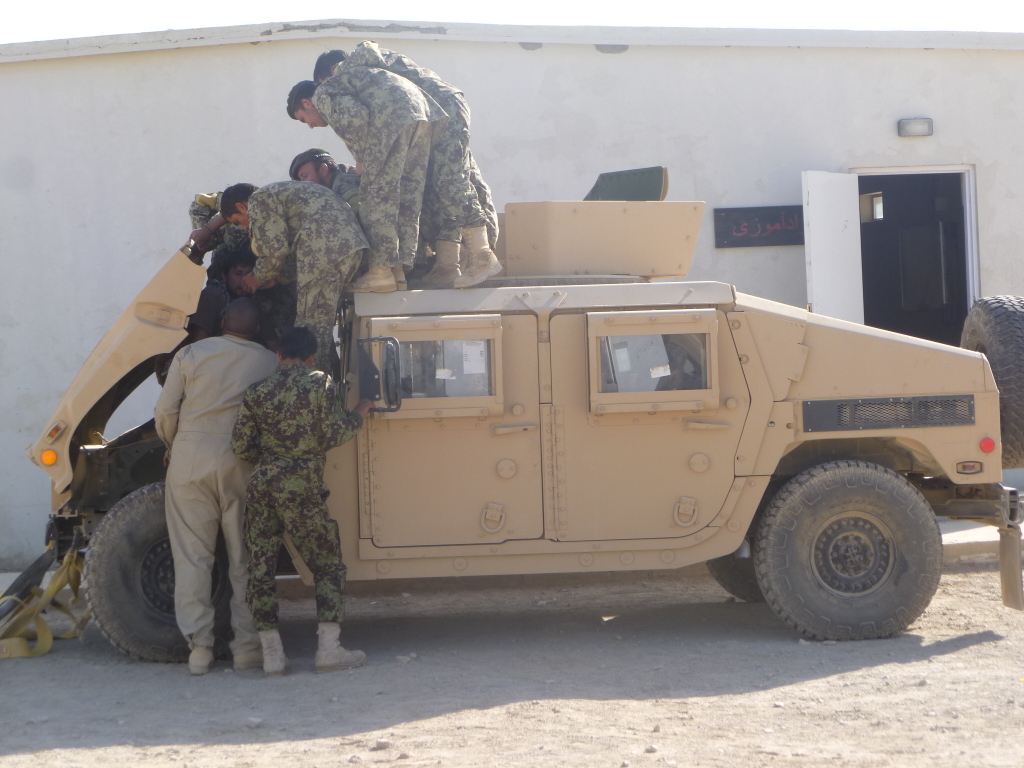
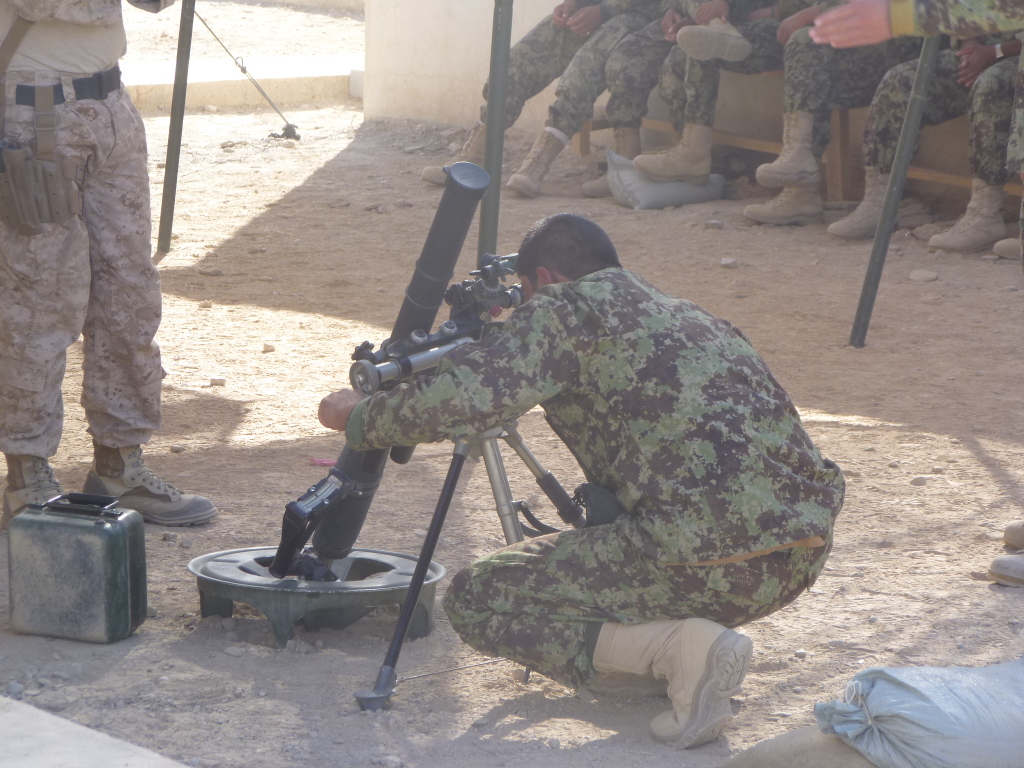
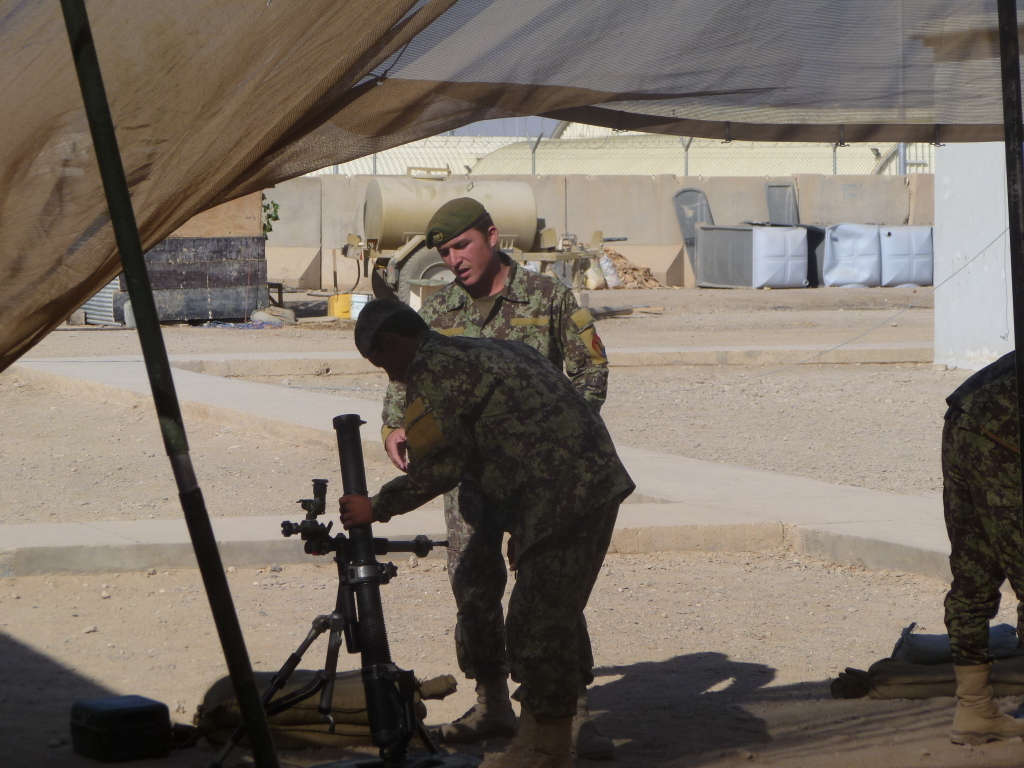
Jorrit Kamminga: Every year NATO invites a small group of international thinktankers specialising on Afghanistan and the region to visit the country and participate in a packed programme of briefings from representatives of the international community, the Afghan government and the (foreign) military. This trip was especially important as it took place amidst the final stages of the security transition with the foreign military drawdown in full swing, the training of Afghan security forces moving from quantity to quality, and preparations for the presidential elections (April 2014) underway.

How do you evaluate the current security situation in the areas you have visited?

Jorrit Kamminga: With NATO I visited the southern province of Helmand. Heavy fighting took place there this past fighting season with the Afghan national security forces now everywhere in the lead. They are doing the fighting and suffering heavy casualties. However, the various Taliban insurgent groups have been unable to gain a single victory and are unable to achieve any of their strategic goals. Nonetheless, they will continue to try to destabilise the country and create a sense of insecurity in the run-up to the presidential elections.
P1060363What are the implications of what you have observed for the presidential elections in Afghanistan in April 2014?

Jorrit Kamminga: The preparations of the presidential elections have been ongoing for months now. It is an Afghan-led process and they have started much earlier than in 2009. That is progress. This means that the elections will probably go ahead as planned, despite the fact that the Taliban will try to kill a high profile target and will try to prevent the elections from taking place in some areas in the southern and eastern parts of the country. In any case, the West should again be prepared that the elections will not be completely free and fair. Fraud will again be part of it. What is important is that the outcome will be accepted by all major ethnic groups of the country.

Jorrit, your PhD research at the Universidad de Valencia was about counter-narcotics policies and alternative livelihoods in Colombia. How does your work as a NATO adviser in Afghanistan relate to your PhD research in Colombia? What differences and similarities did you observe?

Jorrit Kamminga: Both in Afghanistan and Colombia I am especially looking into counter-narcotics policies within the broader context of security and development. So there is not much difference as the illegal drug economies of both countries and their impact are huge. The only negative outcome of the trip with NATO to Afghanistan was that the international community really seems to have turned its back on the Afghan opium problem. Now that we are on the way out with our military forces, nobody seems to be taking the responsibility to seriously think about effective ways in which the international community can assist the Afghan government in the next ten years. It is all the more surprising giving the record levels of illicit poppy cultivation that were announced recently by the UN and the fact that the Taliban insurgency is deriving a large part of its income from this illicit industry.
P1060351P1060359What can we learn from your experiences about drug policy, organised crime and conflict more broadly?

Jorrit Kamminga: Despite the still popular political message that illicit drugs are bad and have to be confronted, countries such as Afghanistan and Colombia show that the repressive model of the war on drugs has not produced any sustainable results, and has had numerous negative side effects. In Afghanistan the ongoing conflict has produced an ever bigger war economy that not only maintains the Taliban insurgent groups but also feeds corruption and has created a huge group of local power holders, warlords, drug traffickers and other actors that are making a comfortable living of the illicit drug economy and prefer to keep things as they are. That has been one of the biggest impediments of stability and prosperity in Afghanistan in the past twelve years. For the international community, the priority has been clearly to fight the Taliban insurgency but to ignore one of their biggest sources of income. In many ways it has been the elephant in the room since we started to engage with Afghanistan in 2001.

Thank you very much for your time, Jorrit. One last question: what are your plans for the future?

Jorrit Kamminga: Now that my PhD dissertation is submitted, I am looking for ways to continue my research on Afghanistan, Colombia and counter-narcotic policies. I hope to find a post-doc research position that will allow me to build on my on-the-ground experience and on the findings of my PhD research.

Pictures from the field: Alternative livelihoods in rural Colombia

by Jorrit Kamminga (May 2013)

My PhD research analyses international support for alternative development and trade policies that aim to reduce the supply of illicit drugs. The central argument of the research is that Colombia can be considered a benchmark for the development of an effective international regime on cross-border support for alternative development strategies. This regime – the key academic contribution of the research – would be called an International Economic Security Regime (RISE, using the Spanish acronym of Régimen Internacional de Seguridad Económica). It combines international regime theory (Stephen Krasner et al.) with the theoretical concepts of ‘economic security’ and ‘shared responsibility’.

For my field research on alternative development in Colombia, I visited three regions: Tumaco, Meta and the Sierra Nevada de Santa Marta. Here are a few photo impressions from my trip in May 2013.

For more field research pictures from other young scholars, please click on the links below:

Researching Security Debate: Violent Pluralism and Disorganised Crime

The thread below is an ongoing conversation between young scholars of the Researching Security network. Please use the comment box below to participate in the debate or contact us directly via researchingsecurity@gmail.com.

Juan Carlos Ruiz (29 April 2013)

Dear Researching Security members
Have you at some point come across the idea of “disorganised crime”. I have read it in a paper from Claudio Beato but I was wondering if somebody else talks about it more deeply?
Juan Carlos

Verena Brähler (29 April 203)

I have read several articles by Beato Filho but I don’t remember coming across the “disorganised crime” concept. Send us the full reference for those of us that are interested! 
On the same token, does anyone else also use the “violent pluralism” concept by Goldstein and Arias as an analytical framework?
Verena

Juan Carlos Ruiz (1 May 2013)

In this article there is a general mention of disorganised crime referring to the aftermath of violent crimes, gangs fights and turf disputes. The premise is that organised crime is quite silent in controlled territories. However, what happens in other neighbourhoods is quite the opposite as small and fragmented drug gangs are fighting each other all the time for turf and selling points control. I heard it previously in a conference but I don’t remember where or by whom. I’m trying to go deep in that since is a key issue in my work…
Juan Carlos

Verena Brähler (10 June 2013)

I have observed the same thing that Juan Carlos Ruiz mentioned in Rio de Janeiro: whenever the dominion of a violent actor is strong and undisputed, this leads to a situation of relative peace and tranquility. When the security or violence market is fragmented (with two or more “competitors”), violent competition for territory is common. 
In my research I argue that different public and private, legal and illegal security providers (e.g. military police, armed forces, drug traffickers, militias, private security companies) engage in a dynamic, ever-changing process of territorialisation and reterritorialisation with each other, the ultimate goal being to become the dominant market leader in a specific territory as this, firstly, is good for their business (or their reputation in the case of state security forces) and, secondly, can lead to a situation of relative peace and stability in the community which enforces their legitimacy in the eyes of the residents. 
However, only few security providers in few territories achieve this comfortable position, and never for very long. Sometimes power is deliberately transferred from one security provider to the other. Most of the times, however, power is violently contested by two or more groups. I argue that violence is first and foremost produced by these processes of (re)territorialisation in which the power of one security provider is challenged by another group. The trajectory that emerges is an urban war with life-threatening consequences for the lives of the civilians caught up in this conflict. The security providers themselves, whether public or private, legal or illegal, have no interest in peace because they benefit from the adverse competition and the ever-changing dynamics of the oligopoly of security providers
I am basing my arguments a lot on African studies on governance and statehood. I found this much more useful that Latin American studies on violence and security. Here are the references, maybe you will find them useful as well: 

  • Engel, U. and A. Mehler (2005). ‘Under Construction’: Governance in Africa’s New Violent Social Spaces. The African Exception. U. Engel and G. R. Olsen. Ashgate, Aldershot, Hants, England, Burlington, VT87-102.
  • Mehler, A. (2004). “Oligopolies of violence in Africa south of the Sahara.” NORD-SÜD aktuell 3. Quartal: 539-48.

Please click here to continue reading.

CALL FOR PAPERS: Law, Justice, and the Security Gap, “Security in Transition” International Conference (21 June 2014, LSE, London)

The world is in the midst of a profound change in the way that security is conceptualized and practiced.  Up until 1989, security was largely viewed either as ‘internal security’ or as ‘national’ or ‘bloc’ security and the main instruments of security were considered to be the police, the intelligence services and the military.  This traditional view of security fits uneasily with the far-reaching changes in social and political organisation that characterize the world at the beginning of the twenty-first century.

What we call the ‘security gap’ refers to the gap between our national and international security capabilities, largely based on conventional military forces, and the reality of the everyday experience of insecurity in different parts of the world.  To some extent, public security capabilities are beginning to adapt to the changing nature of insecurity – with new doctrines or new military-civilian capabilities.  But it is also the case that the gap is being filled by private agents – warlords, militias, private security companies, NGOs, for example – and, even though some new forms of hybrid security provision may improve people’s lives at least temporarily, this new market in security may have dangerous implications.

This conference will examine the relationship of law, justice, and in/security at the current juncture by focusing on two broad themes:
a) Is the international legal regime adapting to address the ‘security gap’ and how effectively?
b) What is the role of novel legal instruments, such as international justice and transitional justice, in relation to the ‘security gap’?

Security related law is undergoing fundamental changes with the growing importance of human rights law, international criminal law and transitional justice.  These changes reflect the continuing adaptation and reformulation of legal rules and instruments, as well as the development of new ones.  One example is the extension of responsibility for protection and prevention from states to individuals in cases of war crimes, crimes against humanity, and genocide.  The rules concerning state responsibility are also changing, such as the duty of the state to protect its population and the basis for other actors to fulfil this duty when it fails to do so.

Nevertheless, the current legal regime represents a mismatch of new families of law that extend internal notions of the rule of law, based on individual rights, beyond the nation-state, and classical international law that applies to states, such as international humanitarian law, as well as domestic law.  The tensions, gaps and contradictions inherent in this regime raise a number of unsettled questions, for example what body of law should apply in situations like those associated with ‘new wars’ or the ‘war on terror’.  The security implications of novel legal instruments, such as international criminal courts and various mechanisms of transitional justice, are also largely unclear, especially from the perspective of the security of individuals and communities rather than states.

‘Law, Justice, and the Security Gap’ is conceived as a forum for reassessing security related law and legal instruments and examining their relationship to contemporary forms of insecurity.  The conference seeks to foster a multi-disciplinary discussion that draws on a wide range of approaches and intellectual resources in law and the social sciences and to engage both scholars and practitioners.  Advanced PhD students and early-career researchers are also encouraged to apply.  We invite theoretical and conceptual contributions as well as empirically focused case-studies.

The conference is convened in the framework of the research programme Security in Transition: An Interdisciplinary Investigation into the Security Gap, funded by the European Research Council at the Civil Society and Human Security Research Unit, Department of International Development, London School of Economics & Political Science. Partial contribution to the costs of attendance may be available for accepted participants, depending on needs and resources.

Submission

Please send a paper abstract of 300-500 words and a CV to Pippa Bore p.j.bore@lse.ac.uk by 6 January 2014.  For more information see www.securityintransition.org.

FUNDING: Drugs, Security and Democracy Fellowship

The next deadline is January 20, 2014.

The Drugs, Security and Democracy (DSD) Program provides support for research across a variety of disciplines—anthropology, sociology, criminology, history, political science, international relations, economics, journalism, public policy, legal studies, public health, and other related fields—to create a network of scholars interested in developing alternative approaches to drug policy. The competition is open to PhD candidates and recent PhD recipients worldwide.

The program strives to create a stronger, more systematized knowledge base on drugs, security and democracy in Latin America and the Caribbean; to build capacity—both institutional and individual—by supporting relevant research; and to encourage policy-relevant, evidence-based research that could lead to the development of alternatives to present-day drug policies. To watch a video about the program featuring DSD fellows, click here.

The online application is now available at http://www.ssrc.org/fellowships/dsd-fellowship/.

Fellowship Research Agenda

DSD funded research must address the primary theme of drugs in relation to security and/or democracy in Latin America or the Caribbean. These topics may include, but are not limited to, the following issues and areas of study: the relationship of drugs to crime and violence, the impact of drug policy innovations (decriminalization, etc.), and the impact of drug markets on public health and human rights. Proposals must demonstrate the potential of the research to contribute to a sound and credible knowledge base for informed advocacy and decision making for drug policy. Projects that do not have a primary focus on the theme of drugs will be eliminated from the competition.

The program encourages interdisciplinary and comparative projects and those that address transnational and trans-regional issues. We encourage research in or about countries or themes that have been underrepresented in the program’s previously funded projects. Please click here for a list of previously funded projects.

Eligibility

Applications are welcome from PhD candidates and postdoctoral researchers conducting research that addresses the primary theme of drugs in relation to security and/or democracy in Latin America or the Caribbean. Eligible applicants will fall into one of the following two categories:

Dissertation Fellowship: This competition is open to PhD and JSD candidates worldwide who have an approved dissertation prospectus by July 1,  2014, but have not completed writing for final submission.

Postdoctoral Fellowship: The competition is open to PhD and JSD recipients worldwide who have completed their degree within 7 years of the application deadline (on or after January 20, 2007).

If you are proposing to conduct research in your  non-native language, you should provide evidence of the necessary proficiency to carry out the project. The program strongly encourages citizens and residents of Latin America and the Caribbean to apply.

Fellowship Terms

The DSD Program provides support for a minimum of 3 and a maximum of 12 months of research. Candidates based outside of Latin America or the Caribbean must spend at least three months conducting research in the region. Fellowship amounts vary depending on the research plan; however, support will be provided for travel and living expenses as well as associated research costs based on a budget reviewed by the SSRC. The fellowship is intended to support an individual researcher, regardless of whether that individual is working alone or in collaboration with others.

Recipients of the DSD Fellowship are expected to devote themselves full-time to their DSD research during the tenure of the fellowship. Dissertation fellows must complete the fellowship within a continuous block of time and may not take classes or teach during the fellowship. Postdoctoral fellows need not schedule their fellowship in a continuous block of time. The fellowship includes mandatory participation in two interdisciplinary workshops, one preceding fellowship research and one upon completion of the fellowship tenure. Workshops will be organized by the SSRC and held in Latin America in July or August. Travel and accommodations will be provided.

DSD is funded by the Open Society Foundations and the International Development Research Centre. The program is a partnership between OSF, IDRC, the SSRC, Universidad de los Andes in Bogotá, Colombia, and Centro de Investigación y Docencia Económicas in Mexico.

For more information please visit our program webpage and contact dsd@ssrc.org with any questions.

Funding and fellowship opportunities in the field of security studies

Our network member Jorrit Kamminga has created the new Research Funding section on our website with the aim to provide a good overview of funding, fellowship or post-doc opportunities that are specifically related to the fields of security, military analysis, crime prevention, drug policy, Latin America studies or related fields.

Please click here to learn more about exciting funding opportunities and stay up to date with any deadlines!

We would be grateful if you could contribute to this effort in the future by sending suggestions to Jorrit Kamminga at jokam [at] alumni.uv.es.

SEMINAR: Anthropology and Security Studies (9 April 2014, Royal Anthropological Institute, London)

SEMINAR SERIES AT THE ROYAL ANTHROPOLOGICAL INSTITUTE, LONDON

Wednesday, 9 April 2014 at 5.30 pm

With Prof Christopher Farrands, Nottingham Trent University, and Dr Giovanni Ercolani, Universidad de Murcia

This event is free, but tickets must be booked.  To book tickets please go to https://ercolani.eventbrite.co.uk/

Dr Ercolani has recently published a book on this topic, Anthropology and Security Studies.  More information on the book can be found here.

CALL FOR PARTICIPATION: Comparative Approaches to Security Sector Reform, with a special focus on the penal system (March 2014, Sao Paulo)

Do you research security sector reform, especially prisons and police, in developing, post-conflict and transitional country settings? Would you be interested in meeting and working alongside Brazilian colleagues doing the same, to share ideas, methodologies and comparative analysis?

Under the Researcher Links scheme funded by the British Council and São Paulo State Research Council we will be holding a two-day workshop on the above theme in São Paulo on 13-14 March 2014. The workshop’s focus is on career development, international collaboration, network building and peer mentoring. The workshop is being coordinated by Dr Fiona Macaulay of the University of Bradford Peace Studies Department and Dr Renato Lima, of the Brazilian Forum on Public Security, and will have contributions from other leading researchers – Professor Alice Hills of the University of Durham, and Professor Roy King, Emeritus Professor, University of Bangor from the UK, and Dr Fernando Salla, from the Centre for the Study of Violence, University of Sao Paulo, and Dr Túlio Kahn, UNDP consultant and former Chief executive of the Latin American Institute on Crime (ILANUD).

We are now inviting Early Career Researchers from the UK and Brazil to apply to attend this workshop. All travel and accommodation expenses will be covered by the Researcher Links programme. The application form, with more details on the initiative, can be found here and should be sent to Dr Macaulay at f.macaulay@bradford.ac.uk before the deadline of 1 December 2013.

Theme of the event

Security sector reform (SSR) focuses academic and policy-oriented research on how transitional/democratizing states manage public security, rule of law, human rights compliance, and crime. It encompasses discrete research areas, into police, judiciaries, armed forces, transitional justice, and penal practices.

Brazil has developed the densest epistemic and policy community on domestic SSR issues in Latin America, due its size and the challenges of reforming its police forces, prison system (the fourth largest globally) and courts. Although its senior members collaborate in some comparative research networks, adapting and adopting methods and best practice policies from some other regions (Latin America, Europe, North America) for application to Brazilian problems, Brazilian researchers do not frame their research as SSR (seen as a foreign policy enterprise of the global north) or conduct research beyond Brazil. Yet, as an emerging, global power, Brazil is involved in peacekeeping (Haiti), South-South practices of technical assistance to developing regions (Africa), and norm development in the international system. Brazilian researchers would benefit from exposure to comparative work in other post-conflict/transitional regions on which British researchers tend to focus (Middle East, post-Communist countries, Sub-Saharan Africa) due to geographical proximity, colonial ties, UK engagement in military conflicts, and language issues. Post-conflict states are seen as receivers, not generators of SSR technologies that are developed in the global north, yet have mixed results when ‘exported’. However, Brazil and other stable, middle-income Latin American states offer valuable lessons in endogenous, novel or hybridized SSR models.

This workshop brings together Brazilian and UK researchers working on SSR from different disciplines and regions to widen the comparative horizons of both. It focuses especially on the penal system, as a relatively under-researched area in Brazil (prisons are currently a major source of domestic insecurity) and the UK (domestic criminology’s output on prisons remains unconnected to SSR debates).

CONFERENCE REPORT: Beyond Neoliberalism? Politics and Punishment in Contemporary Societies (University of A Coruña, 3-4 October 2013)

The Law School of the University of A Coruña hosted an International Conference on 3-4 October, organised by the ECRIM research group and entitled “Beyond Neoliberalism? Politics and Punishment in Contemporary Societies”.

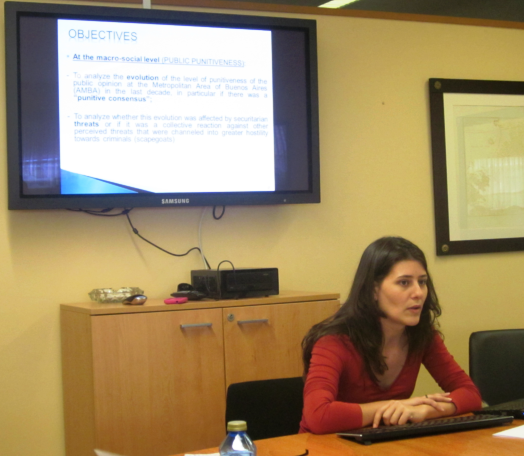
Ale foto conferenceOur fellow Alejandra Otamendi (University of Buenos Aires, Argentina) gave a presentation on “Public support of punitive policies at the Metropolitan Area of Buenos Aires (2000-2010)”.

For a full conference report, please click here.

CALL FOR PAPERS: Converging practices in security and development: Using fieldwork to bridge the theory/reality gap in security studies (2014 CPSA Annual Conference, Canada)

2014 Canadian Political Science Association Annual Conference

Hosted at Brock University, St. Catharines, Ontario, Canada, from 27 May – 29 May 2014. For more information on the conference, click here.

Call for Participants – Roundtable, by Amélie Forget

The evolution of the international security environment and of public policies led to a convergence of the realms of security, defense and development. This shift has blurred the distinctions between professional and social categories, making our understanding of the distribution of power, roles and responsibilities of international security actors more complex than ever.

This roundtable addresses the impacts of these changes on three sets of actors – the military, humanitarians and development agents. Sharing insights from their fieldwork observations, participants will discuss the different contexts that connect these security actors together, the practices they implement in their day-to-day interactions and the social meaning they give to this undefined security environment.

Acknowledging the practical turn, the interdisciplinarity and the intersectoriality of security studies, this roundtable also explores the added value of more sociologically oriented fieldwork.  Experience has shown that in depth qualitative research with security actors enriches our understanding and provides necessary data to overcome the boundaries of theoretical frameworks, conceptual categories and disciplines. The roundtable will question whether the contributions of such researches are mainly empirical or if they also help to fill the theory/reality gap of IR theory and security studies.

This initiative brings together participants from various subfields of the discipline, and will be held in both English and French. If you would like to join the roundtable, please contact Amélie Forget –  amelie.forget.2@umontreal.ca  – before Friday November 1st.